

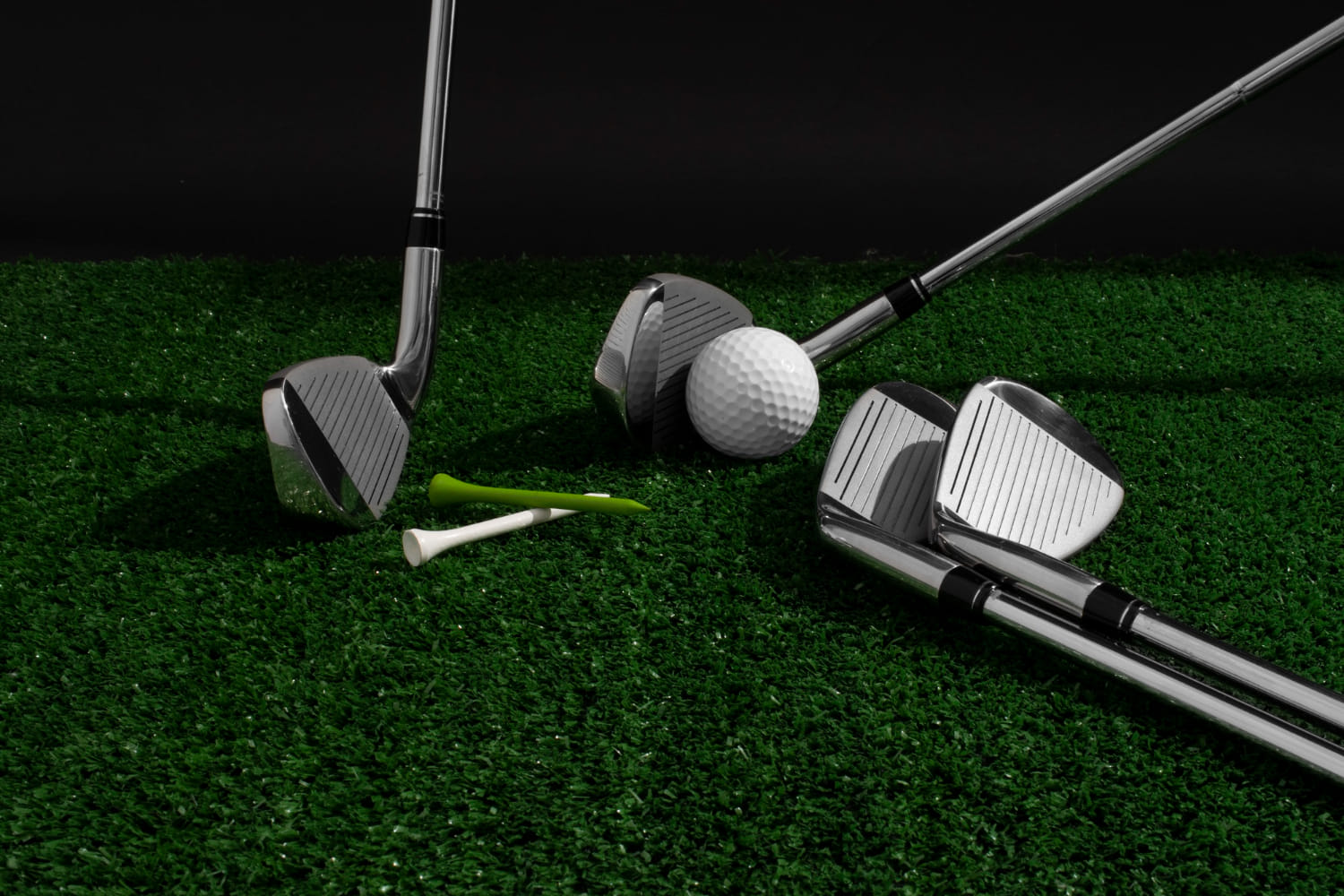
A golf club fitting is, at its core, a way to stop guessing, because you hit real shots, you look at what the ball actually does, and you make small, controlled changes to see what improves things.
For many golfers, the biggest win is the calm that comes from seeing the ball start closer to where you intended and knowing your “usual miss” is more manageable.
What a Golf Club Fitting is (and What You’ll Do During One)
A fitting works best when you think of it as a conversation between your swing and the equipment. You’ll usually begin with your current clubs as a baseline. Where do you tend to strike the face? What does your typical shot shape look like? Do you deliver the club with a lot of loft, or do you de-loft it at impact? Those patterns give the session a clear starting point.
From there, it becomes a sequence of small experiments. A fitter might adjust loft (which influences launch), switch shaft profiles (how the shaft loads and feels through the swing), or test different head designs; grips often enter the picture too since sometimes the difference between a face that feels stable and one that feels “busy” is simply what’s in your hands.
It also helps to know that “a fitting” can mean very different things. Some golfers want the whole set looked at as a system, while others just want to tighten up the driver or dial in wedge distances. If you’re deciding what makes sense for you, a quick look at the available fitting types can clarify the difference between a focused session and a full-bag appointment.
If you’re newer to the game, the right setup can make learning feel less like a battle. Clubs that match your height and tempo make it easier to find the centre of the face and launch the ball with less effort; you’ll still need practice, of course, but good equipment helps you build habits that don’t rely on compensations.
For the typical mid-handicapper, the improvement often shows up in dispersion. With a fitting, you can try combinations that bring you into a more reliable “window” for launch and spin. This means fewer shots that balloon unexpectedly or peel off line when you felt the swing was decent.
Low-handicap golfers often come in with a different aim: refinement. Gapping (the spacing between clubs), wedge flights, and a driver setup that keeps the common miss in play can all be sharpened with the right session. If you like understanding the logic behind those decisions, a clear outline of the fitting process reflects how many serious studios structure the work: method first, conclusions second.
Before you go, take a minute to define what “better” looks like for you. Is it a driver that doesn’t drift right? More height into long irons? Tighter distance control with wedges? A simple goal gives the fitter something concrete to build around, and it keeps the session focused when there are lots of tempting options to test.
During the session, stay involved. If a club feels heavy, if you’re losing awareness of the head, or if it sits awkwardly behind the ball, mention it. A fitting works when numbers and feel move in the same direction. When you’re ready to turn your notes into an appointment, you can book a fitting and choose the session length that matches the part of your game you’re trying to improve.